

At UBUCHANGE, we believe that the future of refugees is not in aid but in business.
Too often, refugees are seen as people who only receive. They get food rations, they get
donations, they get support. But what happens when aid is reduced? What happens when
funding stops? Families are left with nothing.
We started UBUCHANGE to change this. Our solution is what we call
Salespreneurship. This model gives refugees the power not only to create products but
also to sell them. It puts control in their hands. It builds independence, not dependency.
What is a Salespreneur?
A Salespreneur is an entrepreneur who combines two roles: a maker and a seller.
Many refugees already know how to make things. They can farm, weave baskets, make
art, or sew clothes. But most do not have access to markets. They may create, but their
work does not reach buyers. Others know how to sell but lack quality products. The
Salespreneurship model solves this gap.
In our model, every maker is a seller, and every seller is a maker. When these two skills
come together, income grows, families are supported, and communities move forward.
Why Salespreneurship is Different
Traditional aid or even business training often stops halfway. Refugees might learn
tailoring but have no place to sell clothes. Or they might get farming tools but cannot
access good markets.
Our model is different because it gives the full pathway from training to market.
Salespreneurs are not left behind after workshops. They get continued support through
our 7Cs Ecosystem. This ecosystem makes sure their journey does not end with learning
but continues into income.
The 7Cs Ecosystem
The Salespreneurship model runs on seven key steps, which we call the 7Cs:
- Construct – We bring people together into groups with proper structure,
governance, and leadership. No one succeeds alone. - Collaboration – We link Salespreneurs to refugee-led groups, NGOs, and private
sector buyers. Partnerships make the market stronger. - Capacity – We train in personal development, business, sales, leadership, and
modern farming. Skills are the foundation. - Create – We support the making of products that the market wants: banana bark
baskets, bags, vegetables, and crafts. - Capital – We give access to savings groups, mobile money, and microloans. This
helps them grow step by step. - Channel – We provide sales channels such as the UBUCHANGE e-commerce
platform, social media, and delivery networks. - Connect – We use digital tools to track sales, manage stock, and link directly with
customers.
This is not just training. It is a full cycle that builds independence.
Stories from the Field
In Kampala, we worked with young refugees who had music and art talent. They
performed well but had no income. Through our Stand for Talent project, we showed
them how to sell their skills, organize events, and brand themselves. They became
Salespreneurs in the art space.
In Kyaka II Refugee Settlement, we met single mothers who used to rely fully on food
rations. After joining our training, they learned vegetable farming. They not only fed their
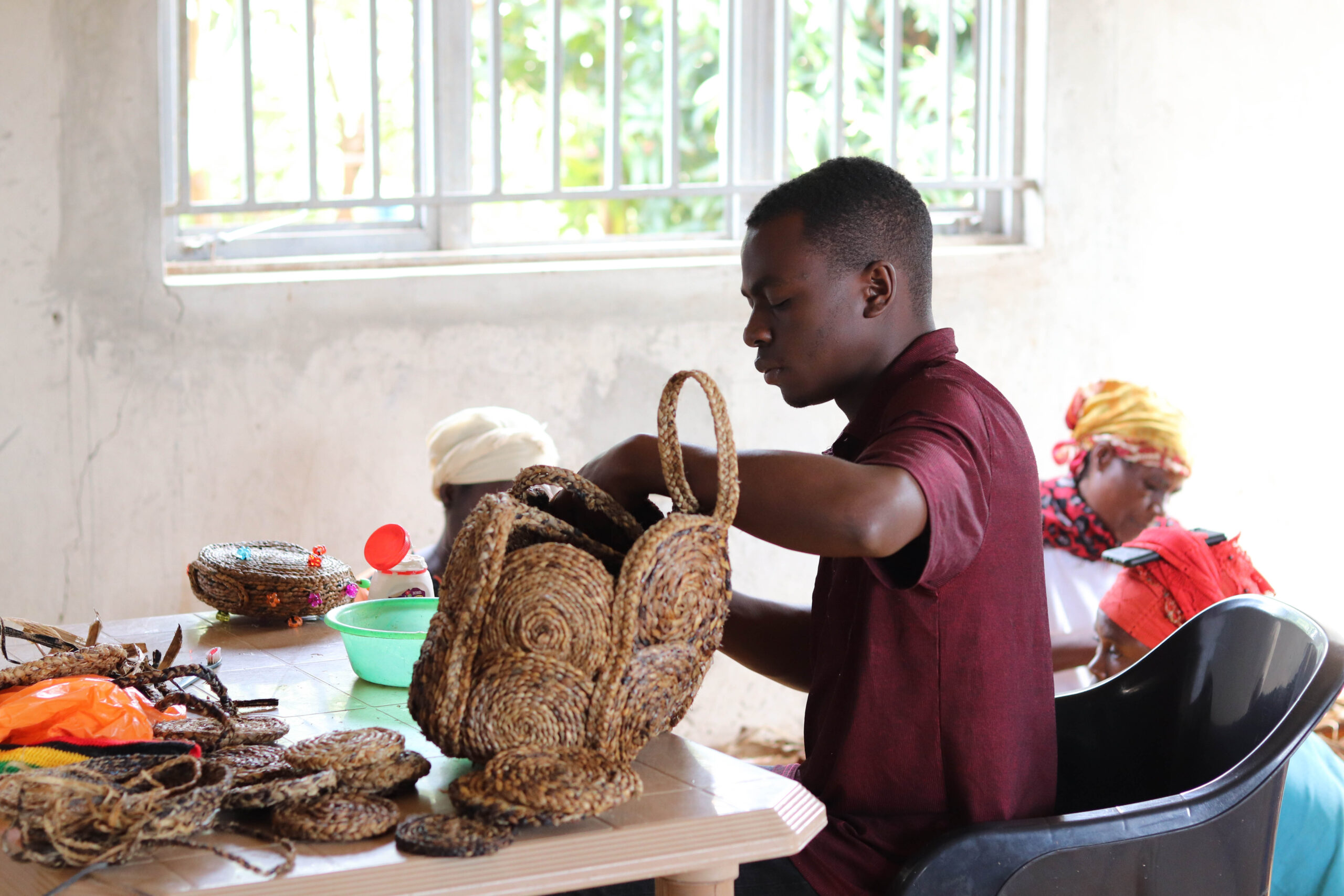
families but also sold the surplus. Others learned how to use banana bark to make eco-
friendly baskets and bags. UBUCHANGE connected them to markets in Kampala. They
became Salespreneurs in agribusiness and crafts.
These stories show how one model can fit different talents and contexts.
The Bigger Picture
The global market is changing. People now want sustainable, eco-friendly, and handmade
products. There is rising demand for organic vegetables, African crafts, and recycled
items. Refugees in Uganda can meet this demand if they have the right tools.
This is why our Salespreneurship model is so important. It is not charity. It is a smart
business. It connects refugee creativity to market demand. It supports both the producer
and the consumer.
Data and Impact
Uganda has more than 1.5 million refugees. Many are young people and women. Yet
unemployment is very high. Aid alone cannot solve this.
Our goal by 2030 is to train 10,000 Salespreneurs. We also plan to facilitate 5 million
USD in annual sales through our marketplace. These are not just numbers. They
represent families with food on the table, children in school, and communities that no
longer depend on aid.
Why It Matters
Salespreneurship is more than business training. It is a change of mindset. It tells
refugees:
● You are not only a receiver.
● You are a maker.
● You are a seller.
● You are the solution.
This model gives dignity back. It builds confidence. It opens doors to opportunities that
last.